China-made. Ready for your next idea.
Hardware projects, releases and stories.
Discover what people are building. Find the hardware for your next project.
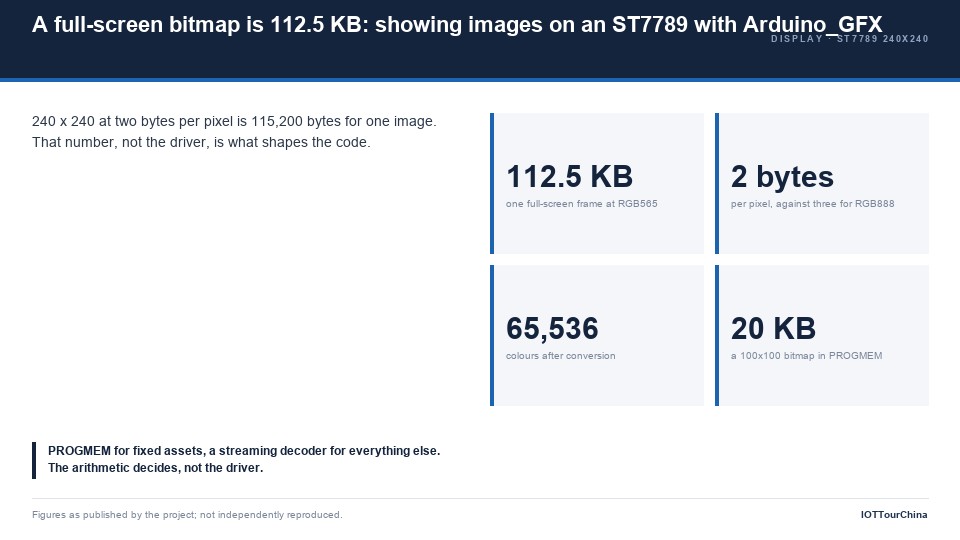
A full-screen bitmap is 112.5 KB: showing images on an ST7789 with Arduino_GFX
240 x 240 at two bytes per pixel is 115,200 bytes for one image. That number, not the driver, is what shapes the code.
Read storyNew on IOTTourChina
View all newsRecently added projects and tools. Dates shown are the original report dates.
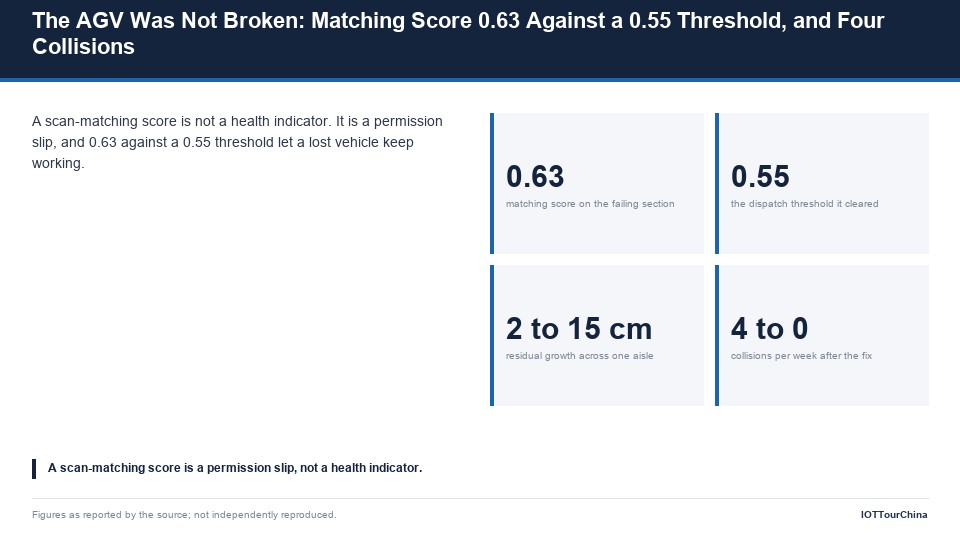
The AGV Was Not Broken: Matching Score 0.63 Against a 0.55 Threshold, and Four Collisions
A scan-matching score is not a health indicator. It is a permission slip, and 0.63 against a 0.55 threshold let a lost vehicle keep working.
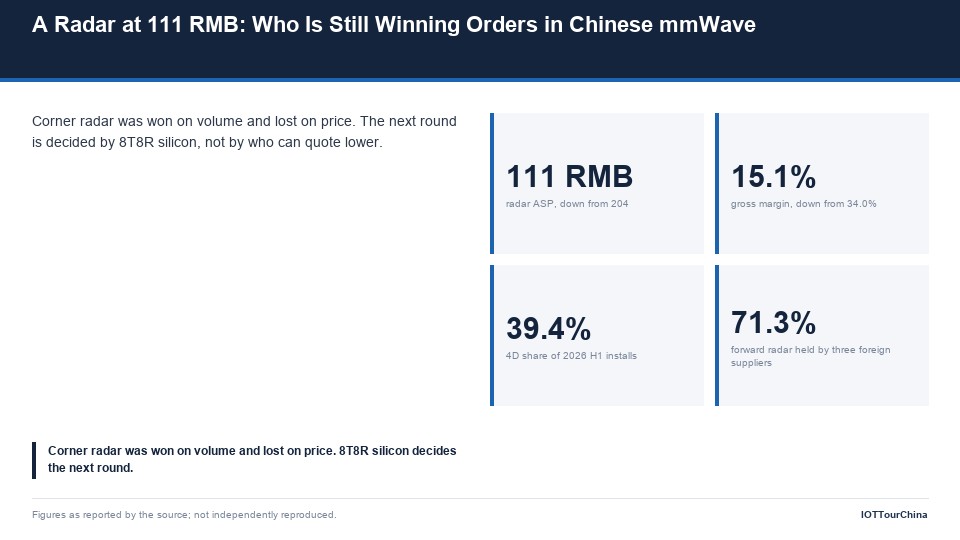
A Radar at 111 RMB: Who Is Still Winning Orders in Chinese mmWave
Corner radar was won on volume and lost on price. The next round is decided by 8T8R silicon, not by who can quote lower.
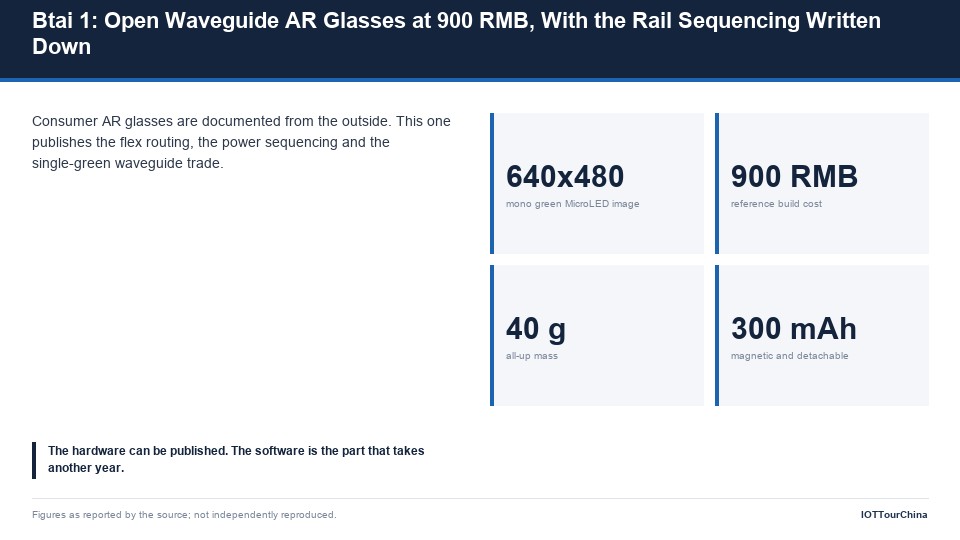
Btai 1: Open Waveguide AR Glasses at 900 RMB, With the Rail Sequencing Written Down
Consumer AR glasses are documented from the outside. This one publishes the flex routing, the power sequencing and the single-green waveguide trade.
Latest news
View all newsThe AGV Was Not Broken: Matching Score 0.63 Against a 0.55 Threshold, and Four Collisions
A scan-matching score is not a health indicator. It is a permission slip, and 0.63 against a 0.55 threshold let a lost vehicle keep working.
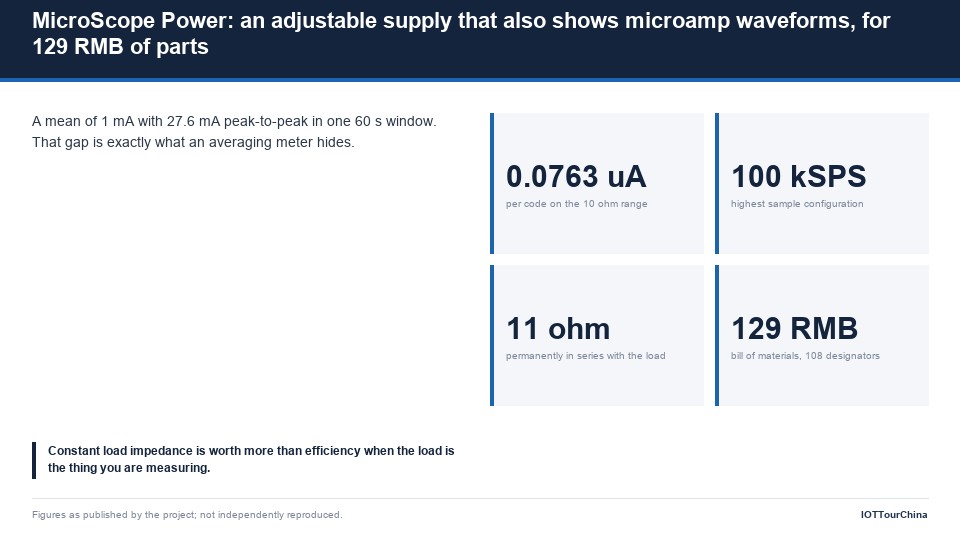
MicroScope Power: an adjustable supply that also shows microamp waveforms, for 129 RMB of parts
A mean of 1 mA with 27.6 mA peak-to-peak in one 60 s window. That gap is exactly what an averaging meter hides.
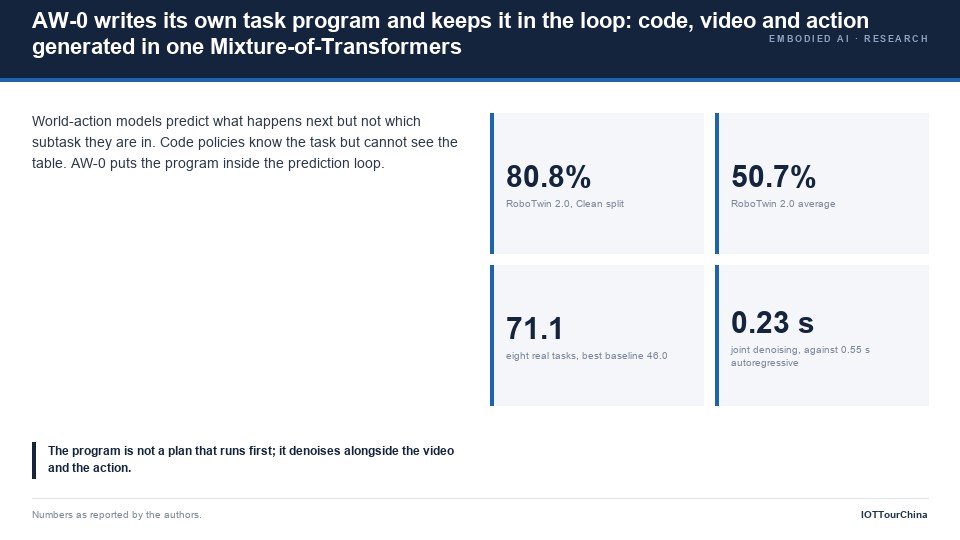
AW-0 writes its own task program and keeps it in the loop: code, video and action generated in one Mixture-of-Transformers
World-action models predict the next frame but not which subtask they are in. AW-0 puts the code expert inside the prediction loop.
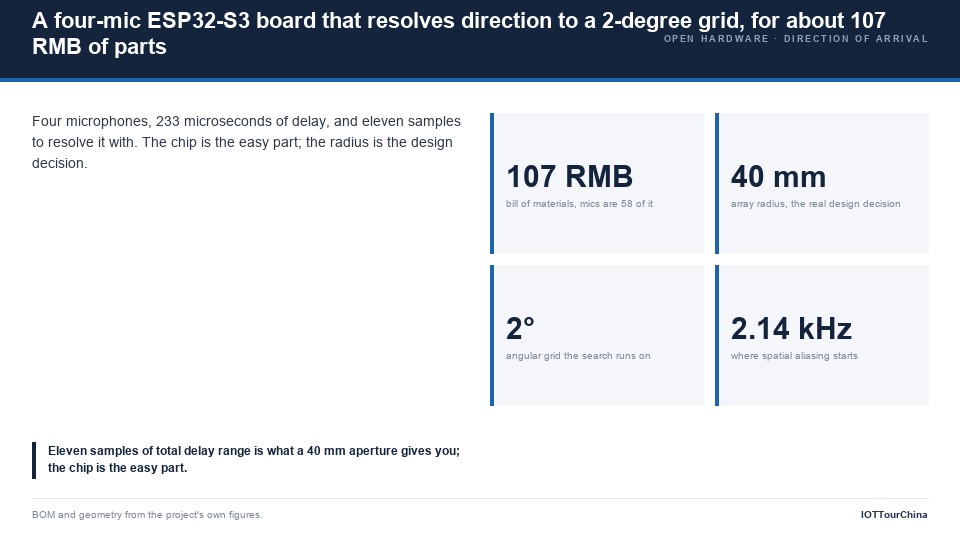
A four-mic ESP32-S3 board that resolves direction to a 2-degree grid, for about 107 RMB of parts
Four microphones, 233 microseconds of delay, and eleven samples to resolve it with. The chip is the easy part; the radius is the design decision.
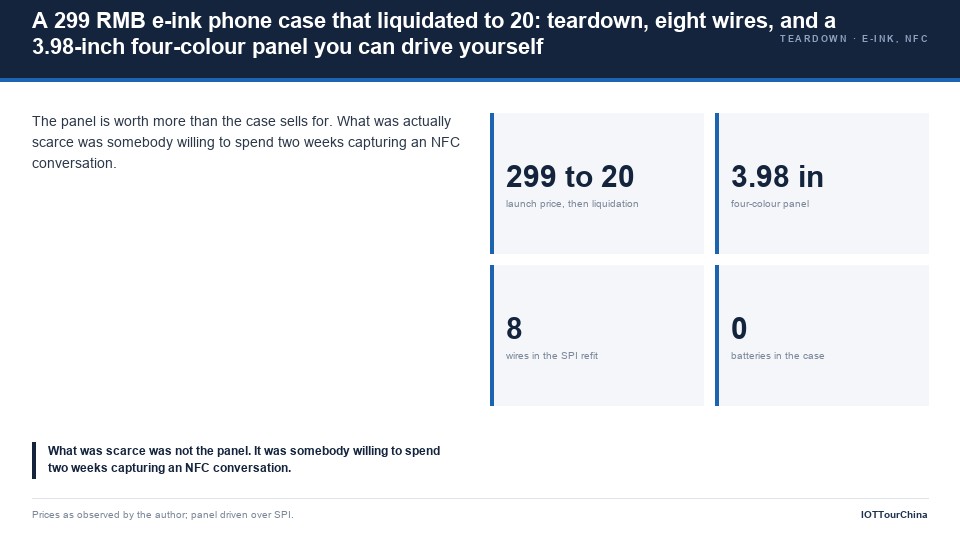
A 299 RMB e-ink phone case that liquidated to 20: teardown, eight wires, and a 3.98-inch four-colour panel you can drive yourself
The panel is worth more than the case sells for. What was actually scarce was somebody willing to spend two weeks capturing an NFC conversation.
A Radar at 111 RMB: Who Is Still Winning Orders in Chinese mmWave
Corner radar was won on volume and lost on price. The next round is decided by 8T8R silicon, not by who can quote lower.
Hardware to explore
View all devices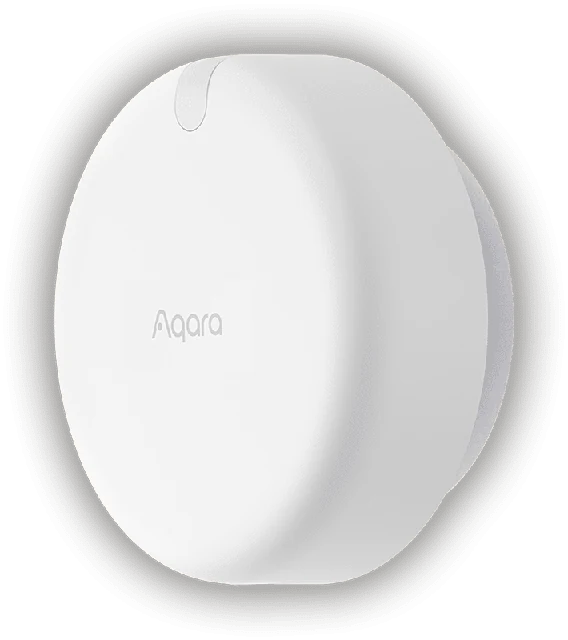
Aqara Presence Sensor FP2
Wired radar presence sensor with configurable room zones and third-party ecosystem support.
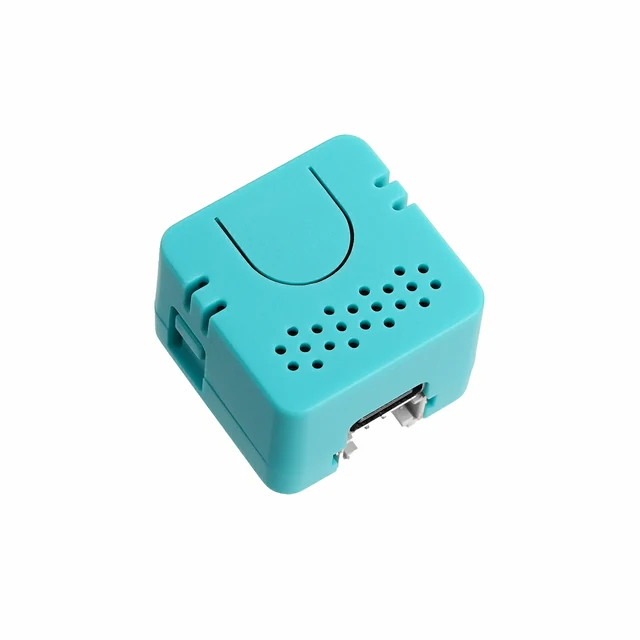
M5Stack Atom VoiceS3R
Programmable ESP32-S3 voice kit with microphone and speaker for assistant and audio projects.
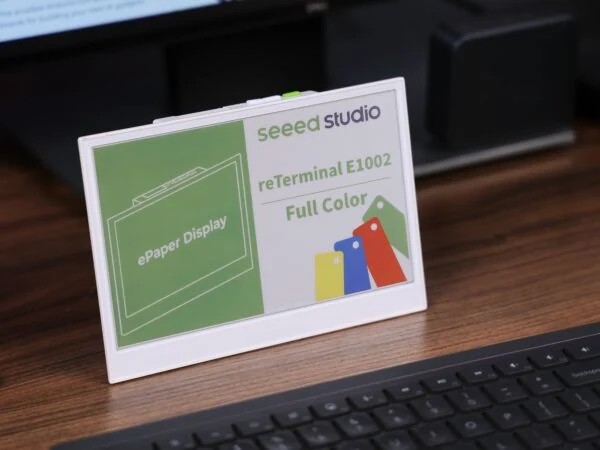
Seeed Studio reTerminal E1002
Battery-powered ESP32-S3 terminal with a 7.3-inch color e-paper display for low-refresh dashboards.
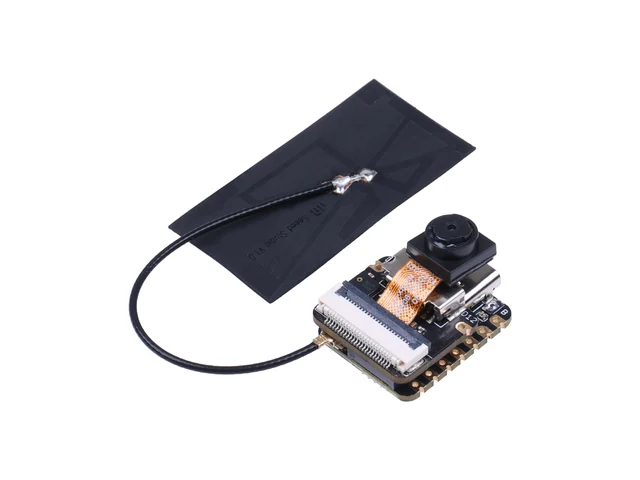
Seeed Studio XIAO ESP32S3 Sense
Compact ESP32-S3 development board with camera, microphone and microSD support for connected prototypes.
Start with a project
What would you like to build?
Read before you choose
View all guidesESP32 chip comparison: C3, C6, H2, S2, S3, P4 and C5
Start from the radio, not the processor. The wireless block decides which products you can build.
Aqara FP2 or SONOFF SNZB-06P: choose by scenario
Choose a presence sensor by the automation you need, rather than treating all radar sensors as equivalent.
ESP32 hardware selection: from development board to module to antenna
A board proves the idea, a module is what you ship, and the antenna is what the certificate was issued for. Decide all three before the PCB exists.
ESP32 production readiness: what changes after the prototype works
Radio approval, eFuses and chip revisions are settled long before the first shipment. This is what changes when a prototype becomes a product.
ESP32 supply chain: what Espressif's own documents say, and where they stop
Espressif's filings, longevity table, PCN log and certification ledger answer most supply questions, and stop short of a few you would expect.
ESP32 low-power reality: what the sleep current tables actually say
Six Espressif datasheets list sleep currents that differ by more than nine times, and none of those numbers describes the board on your desk.
Hikvision DeepinMind (AI super brain): four tiers and how to read the model code
The line runs from 8 to 256 channels. The model code shows drive bays, not analytics, and four limits hide in the datasheet footnotes.
Hikvision DeepinMind integration: what the SDK package actually contains
AI work runs over HTTP here. The package ships 287 ISAPI URIs and 340 message schemas, no function reference, and the AI endpoints in a second appendix.
Hikvision AI Open Platform API: model, engine, task, event
Four layers have to exist in order, and three of the identifiers are chosen by your platform rather than the device.
Hikvision HCNetSDK: login, streaming and arming
Two protocols sit behind one login call, alarms arrive through three modes, and video has nine link modes. Each choice changes the parser.
Dahua AI super-brain servers: IVSS, IVD and IVS, and how the model code reads
Dahua splits its intelligent computing range into three product families that look alike on a quotation.
WizSeek, AcuPick and text-defined alarms on Dahua servers
Three features share the same AI cards and appear under different names depending on which document you open.
Connecting to a Dahua server: CGI, SDK, ONVIF and GB28181
A Dahua AI server exposes four integration surfaces plus two platform routes.
Color or monochrome e-paper for your dashboard?
Choose a display around the information you show and how often it changes.
From reading to connecting
Try a local integration
Explore tutorials, preview simulated data and run the local kit on your own network.
Open local workbench guide